Besides their rhyming, there are obvious connections in the production of the films. Charlie Kaufman wrote the former and Spike Jonze directed. Sofia Coppola wrote and directed the latter, and the photographer-husband character is based on Spike when the two were married. Nicholas Cage, protagonist of Adaptation., is first cousins with Sofia. I'm going to be referring to all the characters in these films by the names of the actors who played them. This is way more natural than character names.
The thematic connections of Adaptation. and Lost in Translation exceed the production coincidences, basically: love cures isolation and inspires. At the beginning of each film we find two characters who feel depressed. They are inadequate despite living in already established or privileged situations: Nick Cage, Meryl Streep; Bill Murray, Scarlett Johansson.
The characters feel like strangers in a strange land, and not just the two in Japan. Nick Cage and Meryl Streep wander around Los Angeles, New York, and the bayou, wading through malaise. All characters are searching for a deeper, personal meaning in their lives in some way or another. They feel disconnected in what are supposed to be loving relationships. Nick Cage is the only one not married, but he's dating someone and lives with his twin brother.
No character has found a sufficient coping mechanism. Cage and Streep can't write themselves out of the rut. Murray and Johansson don't find vocational fulfillment either. Unlike naval exercises in the East China Sea, Japan is no help here.
But when the credits roll, all is well. Value in some type of one-on-one connection has inspired hope in life, and this hope is not limited to the value of that connection alone. Murray and Johansson—spoiler alert?—don't get together in the end. They nevertheless come away with a sense of renewed purpose. In both films, the fulfillment of internal emptiness is demonstrated through the classic, masculine movie trope of riding off into the sunset. This is the 21st century, so it's cars on freeways. Adaptation. employs this trope more faithfully, and that's fitting for a movie whose third act is supposed to ironically demonstrate good Hollywood structure. As the renowned screenplay workshop guru had told Cage: "You can have flaws, problems, but wow them in the end, and you've got a hit."
Everyone has found hope through love. Even though these are tougher films to interpret, this can be read into the titles of each film. It's by 'adapting', or "figuring out how to thrive in the world," that Cage and Streep march into the bright future. Having been briefly, rapturously 'lost' in 'translating' their love to each other across a generation in a foreign country, Murray and Johannson also enjoy respective happily-ever-afters.
I'm not hatin'. If the above paragraphs read disparagingly it's only a product of my voice which, you might not have noticed, tends toward sarcasm and irony. I empathize with all four characters and love both movies, or I wouldn't be writing this. It's just that the takeaways from each film haven't been lasting inspiration for me, and I want to explain why. Thus, as I continue to pick apart these films I'll write in the first person—also because keeping case and tense consistent while discussing two characters from two films has been as difficult as finding a nutritious non-Pret meal for less than £5.
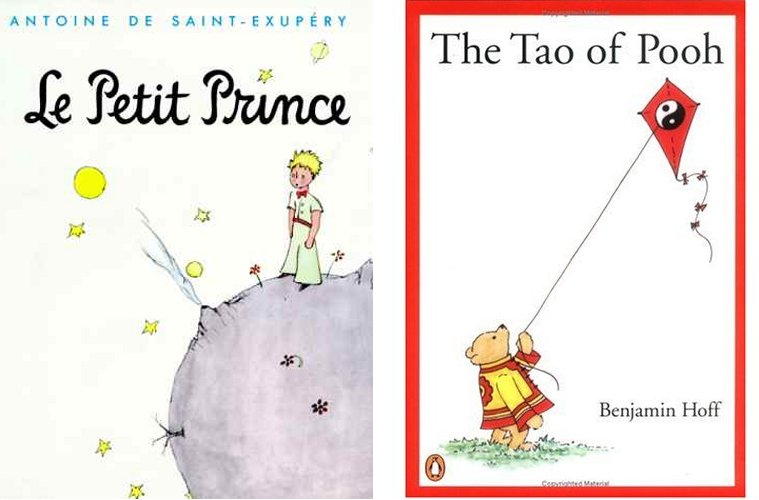
I've been struck with inspiration several times, but this enthusiasm has not lasted. It's not that the inspiration itself did not give good direction but that I did not reinforce it with other people. Before, say, a little prince told me to 'tame' people and see with my heart, I felt distant from people. After reading those inspiring words, I eventually drifted back to a peripheral mood anyway. I was banking on the value I had stored in my mind to energize my actions. 'Principle' injunctions et. al. have not been the problem in and of themselves, but my trying to follow them in and of myself proved ineffective.
"Selflessness! Love other people! Don't be afraid to ask for help! People around you love you!" Right. Those words don't help me. There are two other films I sympathized with that show and don't tell, if briefly, application of personal inspiration.
The King's Speech and Silver Linings Playbook were my favorite movies of 2011 and 2012-3. Besides the connection I felt to each protagonist, their happily-ever-afters show more than themselves or even them with their girls. Lionel sees 'Bertie' standing with his whole family and waving to a crowd representing the adoring British nation. Bradley Cooper and Jennifer Lawrence make out on a La-Z-Boy recliner, excessively, in a house full of their friends and family socializing together in peak form. I'm not going to fault Charlie-slash-Spike or Sofia for ending their films with solo rides into the sunset. No other ending would make sense for those films. In fact, both imply a widening joy from personal revelation. But it helps to see things.
King's Speech and Silver Linings show a central relationship holding together an orbit of other revitalized people, and they imply said orbiters strengthening the center. King's Speech seems to indicate that the entire British Empire will benefit from George VI's victory over adversity. All this from a turnaround within oneself? Wow. I've never been so lucky as to experience that!
A personal revelation with a wider application does not a higher application make, nor does it necessarily produce love flowing throughout. I know I'll be far better off focusing more on making and letting that happen. I'm also gonna keep on watching movies, mining them for flecks of gold. Then I can acquire your precious, precious pageviews and take over the world.