August 15, 2012

No one harms, so no surprises


Bored, I found the sheet music to Radiohead's “No Surprises” to memorize the two-measure hook on my learner’s keyboard. It’s my favorite Radiohead song, and I sing what I know of it daily. Typically, I don’t listen to the original recording, with which Stewart Lee ends the second series of his Comedy Vehicle. No, I have consigned Radiohead (and the Beatles) to Bob Dylan status: I fully recognize their incredible musicality but only enjoy listening to covers of their songs. Thus, I listen to either the Radiodread version or Regina Spektor's cover. The latter is the second track of the mix CD in my car, right after “Jerusalem.”

While this song may be vaguely suicidal, I would prefer to liken it to Pink Floyd’s “Comfortably Numb.” To blend lyrics from the two songs: “You look so tired, unhappy / Bring down the government / They don't, they don't speak for us / I'll take a quiet life / A handshake of carbon monoxide / And no alarms and no surprises / I... have become comfortably numb.”

All very upbeat, encouraging stuff! Ennui is not new to me as I’m sure it isn’t to any of you, but Roger Waters remembers a different MO in the last verse of his song: “When I was a child / I caught a fleeting glimpse / Out of the corner of my eye,” right before he stamps it out at song’s end. I’m interested in that fleeting glimpse.

I just finished The Last Unicorn and identified with King Haggard. Even as he was undone he simply laughed “as though he had expected it” because “very little ever surprised [him].” I keep my room at least as dark as Haggard kept his castle, my costs as low and my company as sparse; but, as I’m not interested in unicorn genocide, I don’t take our similarities lightly.

Haggard thought he knew everything there was to know, even though he didn’t. I don’t have delusions of omniscience, but I’m sure Haggard and I aren’t alone in finding everyday life boring. If I do essentially the same thing each day; and, as Mark Twain observed, current events really do rhyme with history, what can I reasonably expect to surprise me?

Roger Scruton’s Very Short Introduction to Beauty comes to the rescue once again. He deftly distinguishes between the energy of disinterest and the emptiness of no interest. He argues that pleasure in beauty is disinterested:
When I read a poem, my pleasure depends upon no interest other than my interest in this, the very object that is before my mind. Of course, other interest feed into my interest in the poem: my interest in military strategy draws me to the Iliad, my interest gardens to Paradise Lost. But the pleasure in a poem’s beauty is the result of an interest in it, for the very thing that it is.
But his next claim is, appropriately, more interesting:
The pleasure in beauty is curious: it aims to understand its object, and to value what it finds.
The italics are his, but I bolded value.

I've already written about finding beauty in everyday life, but I was more concerned with rationally assessing and recording quality aesthetics. I didn’t think to be curious for value! Now, I’m neither an Existentialist nor a Taoist, but I subscribe more to the latter philosophy regarding value. I think that while we have great imaginative powers to invent valuable things, we more often discover value that has already been created. The italicizing and bolding is over now, I swear.
Just read them
In short, I have been comfortably numb and have enjoyed no alarms and no surprises for some time. And I, probably mistakenly, believe I understand most things around me. But I know I haven’t cared to value what I find.

Living during an information glut, you grow to assume very little will hold value. If you stop there you will be bored at best and apathetic at worst. But not expecting much to hold value means finding value will be surprising, will be more than “just a little pin prick... to keep you going through the show.” You will not intone empty appraisals as the speaker in “No Surprises” does, but you will be able to genuinely and affectionately speak his words, “Such a pretty house, and such a pretty garden.” Understanding something is a fine step, but valuing what you find is, in Richard E. Kim’s words, “a small beginning.”

August 01, 2012

A History of the Engrish-Speaking Peoples


UC Irvine is a fine institution, and it’s predominately Asian. Take for instance the Ayala Science Library. Its art deco exterior screams “Murcah!” loudly enough for the nearby Ayn Rand Institute to hear, but inside sits a disturbingly stereotypical number of Asians doing what Americans believe they do best — studying. I’m well aware of the studious Asian stereotype, and I’m not interested in blindly perpetuating stereotypes. But I went to Ayala and it is, in fact, filled with Asians.

Very white — and not a smoker, cellist or online gamer — I definitely stuck out when I went to the library one Friday in June to play sudoku and listen to folk rock. But there is an art to blending in by sticking out, and I was able to use my whiteness as a cloak under which I could spy on some Asians.

Holed up in a carrel with my headphones in but my Zune on mute, feigning interest in a box that seemed to hold an irrational number, I spied three students playing a board game at the adjacent table. They had backpacks with them and a few textbooks open, but these sat undisturbed. Evidently, they still had to bring study materials to the library on a Friday night, even to play a board game.

What bode ill for my progress through my sudoku book became the night’s entertainment; I was familiar with the board game they were playing. It was Klaus Teuber’s The Settlers of Catan, a fine game that’s a blend of Risk and Monopoly. Players build settlements and cities on hexes of different resources and reap them according to the dice, connecting their properties with roads. Between the sheep, ore, wood, brick and wheat available on the board, Catan has a diverse political economy. Throw in the resource-stealing and production-blocking robber, special development cards — many of which are knights that can move the robber — and the straightforward objective to get to 10 points, and you have yourself a game.

Imagine this, but instead of two white boys in a kitchen think three Asians in a library.

I started watching their game at about 6 pm, which as an Anglophile I prefer to express as 1800, and got the sense they had all been there quite a while. One guy, who I heard the others call Peter, was dominating the table.

Peter, an average-sized man with glasses, had positioned himself brilliantly at the start of the game. That much was clear to me. He was settled on diverse resources and good odds. He reaped often and was able to negotiate the terms of his trades. Plus, he already had the Longest Road, which is worth two points. Things were not so good for the other two players.

The only woman at the table, Christiana, was living off the fat of Peter’s lands, and appeared happy to just be in the game. Or maybe she was just generally an optimistic person. I couldn’t tell.

The third player, a lanky guy with bleached hair called Michael, seemed to be trying to replicate Peter’s winning strategy. Nevertheless, he kept squandering all his resources on buying knights to protect from the robber. He definitely had the two points for having the Largest Army.

But the 1800th hour of that Friday passed quickly, and just after 6:30 the board looked shockingly different. Despite having been so well-positioned at the start, Peter had lost the lead to Michael. Both particle physicists and sociologists know that observing a phenomenon alters it, and I fear I may have affected the game by my longing gaze: I do love to settle Catan.

For, by this time, I was not the only other person watching these three settle. I noticed a surprising number of other Caucasians walking around Ayala, some even butting into the game. I didn’t realize the game was popular enough that these strangers would know how to play it, but they seemed very confident.

Michael listened to everything any passerby might say. One guy in a Rammstein shirt stopped for a moment and casually said, “You need more ore,” before walking off. Just like that Michael built a new settlement, quickly upgraded it to a city and began reaping even more ore.

Peter seemed genuinely troubled by the outside activity around the game, and I can’t admit I blamed him. Anyone could just walk right up to the game and speak their minds. One debonair but silent blond walked by the table, took a stack of Peter’s cards and left a box of cigarettes in its place. Peter, in that wide-eyed but stoically tight-lipped Asian expression of great discomfort, promptly lit one up. I was shocked to see someone smoking indoors, in a public building in southern California no less! Peter didn’t look like a smoker, but he now had more cigarettes than resources. What was he to do.

But this guy looks curious. Peter looked defeated.

Passing the seven o’clock hour, the game only grew more lopsided. Now Michael was really gouging Christiana on trades, and he occupied some of the ports on the coastline adjacent to Peter’s properties, encouraging him to continue smoking and causing him great distress besides. Each turn Peter pursued a new strategy to regain his lead, and each turn the dice dashed his plans to bits. Because Peter’s lead had been so great in the beginning, his stagnating position at this point was even more dramatic. Christiana had not yet led the game that I had seen.

And things got worse before they got better. Though Michael’s knights had gone by the wayside in the six o’clock hour, his interest in amassing them had not. Each turn, his knights would move the robber to one of Peter and Christiana’s most precious spaces and block it. He would then take the card owed him and continue progressing to that now very real possibility of game’s end.

It was about 7:30, and I couldn’t stand it anymore. Giving up all pretense of completing my puzzle and appreciating Beck’s early work, I removed my earbuds and walked over to the table. I immediately told Peter how I thought he could get back at Michael, and then I set to work on Michael. I know it was against the rules, but I quickly removed two of Michael’s cities. This set him back four whole points and seemed to crush the spirit that had driven his expansion since about 6:45.

The game now looked far less lopsided, but it wasn’t to my liking. Peter had stopped smoking, which was definitely good. But he had abandoned the brilliant strategy I had devised for him, allocating his resources in ways I would never. Pacifying Michael really boosted my confidence, so I decided to help out Christiana. (Really, I just didn’t want anyone else to get involved.) But as soon as my plans for her began to unfold, Peter struck back. He did not like the idea of me being there at all; and I, on Christiana’s behalf of course, played many knights back and forth with Peter. In the end I decided it wasn’t worth the effort and left Christiana and Peter, the former of which started buying many knights herself.

It was now 7:45ish, and the game looked new once again. Everything I had said in passing to Christiana and Peter was gospel to Michael. He began quizzing me on strategies I had used in the past, and even though he still bought knights when I had told him not to he was mainly focused on building up his side of the board. He wasn’t interested in building the longest road, but he definitely wanted the most extensive network of roads.

And even though I disagreed with how Peter was playing the game, we were at peace. Christiana’s settlements near Peter’s property were not reaping anything at all, but her more distant cities were doing nearly as well as Michael’s.

Just after eight o’clock, everyone had at least seven or eight points. Michael had not built anything in quite some time, and Christiana’s adjacent cities looked as prosperous as his now aging ones. But the other half of Christiana’s pieces, those by Peter’s, were still not reaping. And for reasons I still don’t quite understand, Peter’s strategy had put him back in the lead, edging out Michael. Christiana and Michael’s strategies made sense to me, maybe largely because they were so similar to my own. But I've never seen anyone settle Catan like Peter and do so well.

Having spent far too much time in the library doing far too little, I left. It was a Friday night after all. I had to get home to browse Wikipedia and listen to NPR. Those three are still settling so far as I know.

July 30, 2012

Coddle that song text!: The analogous as magnanimous

Analogies are the most direct communication, and this piece is a sacrifice fly. I realize by using direct explanation to argue the supremacy of indirect communication that I am weakening my own claim — hitting a long fly out. But, as I hope the net result is a better understanding of the indirect if not greater use of it (if only on my end), this is a sacrifice fly. And just to show even the most routine out can also be an RBI — Analogies are the most direct communication for three key reasons.

But I count five...

1. The novelty of an analogy hooks people, and an idea conveyed analogously is more likely to stick.

A Technical Tony is wont to bear down on any given situation with more and more details. In this way, there are no forests but only many trees with even more branches and innumerable leaves. And it's not really helpful to label a national park on a map as "542,600 trees; 3.7 million branches; 189 million leaves."

Just an ink drawing of my ally I scribbled. It took me, like, thirty seconds.

Straw men aside, Kierkegaard is on my side. He argued that as a mind is not an undisturbed evaluator assessing information from inside a vacuum, it's necessary to, borrowing language from V, use lies to tell the truth. Just as good sentences tell the truth by referencing the latter part of the previous sentence, and then introduce a new thought at the end, Kierkegaard argued communicating indirectly "does not begin directly with the matter one wants to communicate, but begins by accepting the other man's illusion as good money."

This almost works as a sort of open sandwich method whereby the listener is greeted where he already stands then turned around to view matters from a different angle. He listens to the welcome and then just might understand the second part more as he has to process it himself.

2. Analogies don't merely scale with degree, but morph.

Whereas details are Fatburgers, available in various sizes but compositionally identical, analogies are from Jack in the Box. I could order two tacos if I were a little hungry, a sourdough breakfast sandwich if I were a little hungrier, or a Jumbo Jack with Cheese if I were famished. Each level is unique even as they differ in magnitude.

Simple conceits tend to convey more than basic facts. English comic Stewart Lee is highly metaphorical, and he explained the current coalition government as a relationship between two dogs. Whereas David Cameron was bred for power as a bloodhound for hunting foxes, his having to ally with Nick Clegg to wield that power is as if that blood hound could only catch foxes with the help of a small chihuahua. And if British politics don't do it for you, singer-songwriter Cass McCombs is indeed a lionkiller, and I would maintain that Nicki Minaj is a successful reliever who has outgrown the bullpen but doesn't yet know how to pitch for six or seven innings.

Still better than 2010 Jenks. 

Unlike clichés, parables and fables might actually incite thought. Jesus taught in parables about sowing seeds and preparing for wedding feasts to much acclaim. On the fable side, Aesop’s tortoise and the hare have been codified in cliché: "Slow and steady wins the race." If the fable itself is too weathered to be useful, here's a fable update: At rush hour in West LA, it's faster to drive from Santa Monica to LAX on Lincoln than taking the 10 to the 405.

And, of course, there are allegories which can vivify seemingly dead weight. Whether it's spiritual works like The Pilgrim’s Progress or Flatland, a Cold War allegory like Dr. Seuss's Butter Battle Book, or the solid account of a Muslim’s relationship with America post-9/11 in The Reluctant Fundamentalist, allegories make the abstract much more perspicuous. I wonder if someone could explain modern East Asian history as a conversation between three students at a UC Irvine library....

Metaphors and conceits, parables and fables, and allegories should not be confused for each other. Just as you should not expect a breakfast sandwich to suffice for supper as a cheeseburger would, it’s not helpful to think Nicki Minaj chews tobacco or Nick Clegg is used in Taco Bell advertisements.

Actually, I think this works.

3. Analogies require more thought all around.

An analogy is harder to conceive than a simple fact because it requires sufficient understanding of at least two ideas rather than one or, more likely, half of one. The string theorist who can explain the theory as the music of the universe is, by my estimation, a better scientist than his colleague who can only write in obscure and technical language.

But analogies are not received at face value. If they were, they would be reductive at best and misrepresentative at worst. The third-grader who listens to a lecture on string theory will probably absorb nothing, but if he understood strings as playing the music that generates the universe, he would actually begin to think about string theory. This would probably get the young student discussing strings beyond the lecture, clearly a much better outcome than napping through a presentation.


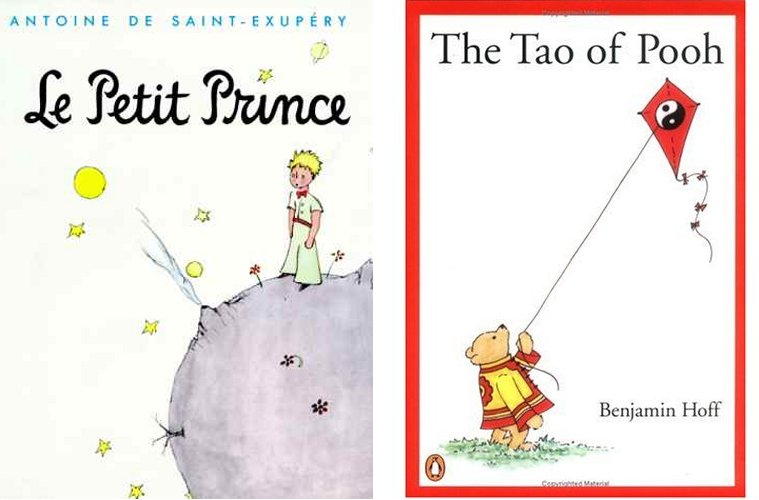
That all having been said, you all need to read The Little Prince and watch Pink Floyd's The Wall if you haven't already.

July 04, 2012

Happy Indie Day


This post is a tribute to the nation that was into liberty before it was cool, and then gave up on it when it became too mainstream. First, a list.

My Top Ten Favourite Things About America
1.       Jack in the Box is open 24/7/365.
2.       Walmart’s annual total revenue is greater than Saudi Arabia’s GDP.
3.       “Coke” means the same thing in every language.
4.       You can openly carry a firearm in 42 states, and only 13 of these states require you to have a permit.
5.       As long as you remain under .08 BAC, you can drink and drive in Mississippi.
6.       The McGriddle
7.       Only India and China have more people, and only Russia and Canada have more land.
8.       The best serial killers, evangelists and athletes are all Americans.
9.       Conspiracy theorists and the senile are significant voting blocs.
10.   The stars and stripes are on the Moon.

And now, new words to classic patriotic songs. First one’s a throwback, next two are cheeky, but the last one tries to be thoughtful.

My County ‘Tis of Thee (c. 1999)
My country, ’tis of thee,
Home of the Burger King,
And Taco Bell;
Land where all foods come fried,
Where Tupac and Biggie died:
Did you hear Clinton lied
About Lewinsky?

My Country ‘Tis of Thee
My country, ‘tis of thee,
Where cold hard cash is king,
But WiFi’s free;
Facebook, Apple, Android,
The terrorists annoyed:
No, we’re not unemployed!
Transformers 3.

America the Beautiful
A big mouthful of Freedom Fries,
Morphine to dull the pain,
For the stock market’s lows and highs,
And Greg’ry House’s cane!
America! America!
We drink coffee not tea,
Our highways sprawl, our trees are tall,
A Celsius degree?

The Star-Spangled Banner
O, don’t throw away the great national blight,
Yes, we might well have failed to fulfill Founders’ dreaming,
But these ’types quite bizarre prove that the people just might,
Conquer foes yet unknown, land on new worlds yet teeming!
But however we fare, whatever fortune we share,
We’ll still wield the right to pray and to swear.
May we then conspire to salvage and to save
Whencever we have come — now, how to behave?

Reagan's official presidential photograph. Thanks to Erich Deicke.


June 21, 2012

A Haiku-storic Day

Besides being the birthday of Philip Davies MP's former Parliamentary researcher, Grainne Magee, 21 June is a rather historic day. Perhaps noteworthy events and hours of daylight are directly related, in which case Norwegian summers must rock. posted twenty five haiku on this day last year and called it the Longest Day in Haiku-storyHere are five more.

1900
China fought the world
to protect its own borders.
Failed. Silly China.

1942
Japanese sub shelled
Oregon, the turning point
of the war for sure.

1957
Johannes Stark died,
lesser Nazi physicist.
Totes not Iron Man.

1997
Rebecca Black born
on her most favorite day—
Saturday, of course.

2009
Greenland rules itself.
Mercator Projection says
that really matters!


Happy solstice, everybody.

June 07, 2012

Swaddle that kahntekst!

Presentation matters, and every nuance of presentation affects tastes. (On the other hand, PowerPoint presentation dont matter too much. Everyone uses Prezi now anyway.) On a basic level, we understand this all too well. At Chipotle, ordering a burrito bowl and ordering a burrito are two very different acts, and you’ll rarely see a man doing the former or a woman doing the latter. Sticking with suburban casual dining, a rosy or indigo filled Jamba cup is much more eye-catching than a brimming branny one. But a burrito bowl can contain identical ingredients to a burrito, and golden smoothies may taste like ambrosia. I wouldn’t know about the latter though. I’m still trying to achieve moksha into Strawberry Nirvana through constant ingestion.

My aversion to brown drank speaks to the often overwhelming power of presentation. When the internal and external conflict a dissonance arises that can lead to a dehumanizing utilitarianism. For example, Mother Theresa was a saint, but she was not a sex symbol. While she was inwardly beautiful but not externally pretty, externally pretty people can be inwardly hideous, and that’s just as confusing.

So if you can’t judge a book by its cover, why not disregard covers entirely? Why not just marry a saint with a catcher’s mitt for a face? In fact, why not distill all essences?: reject fermented beer, the other brown drank, and shoot a thimble of Everclear.

I say swaddle that kahntekst — context for the aphonetic. To me, the act of swaddling often seems irrational. Why should I shower, shave and put on pants if I’m not going to leave the apartment today? Full disclosure: I usually don’t do those things on days when I have nowhere to go and, for an unemployed college graduate, there are a lot of those days. But when I do prepare for the day, I’m reminded that looking presentable is a big confidence boost, even if my idea of presentable is a pimp coat and gym shorts.

But even if I pair a poncho with jeans, I have ‘made special’ my physical person. ‘Making’ anything ‘special’ is silly to me. What would be wrong with everyone agreeing to wear jumpsuits from now on, besides scaring the elderly into thinking they’ve time-traveled to the 1950s’ version of the future? Our clothes don’t determine our character.

They don’t, but there is value in even everyday beauty, and not just in fashion. Setting the dinner table can be an exercise in stagecraft, and even jumping up from the couch to cheer the T/thunder can be a dance. Object placement and basic movement needn’t be means only; they can be little works of art, manifesting a careful imagination.

“So… I should spend my days obsessing over how to open a door perfectly?” Well no, but when you go to open a door why not aim to do it well? This thought of swaddling contexts, really cherishing even simple things, is not some push to launder all toil into perfection. It’s an encouragement that even if you spend your days lounging around your apartment with a Golden Doodle, you can discover, create and do beautiful things.

So, in that spirit, here’s something beautiful I found on Wikipedia a few weeks ago. Even though it's a Mercator projection, it's a joy to look at.


May 14, 2012

Power is so metal

I’ve spent a lot of time this last year cheering what I perceive to be metal — the brutal, gruesome and overwhelming powerful. For a while, I hoped this habit was turning me into Edward Norton. American History X, Fight Club, The Incredible Hulk the man always plays fearless characters. But then I feared that cheering the metal was turning me into a wannabe Edward Norton. And there’s nothing more pathetic than that pasty, acne-prone white guy who reads Ayn Rand and thinks himself the Übermensch.

It's like looking in a mirror.

But, despite some recent weight gain, I don’t believe cheering the metal has turned me into that nerd guy. Rather, I now better understand the relationship between fear and power.

Fearful followers can magnify an extant power. I fell asleep thinking about this and dreamt an interesting illustration of it. I pictured about twenty members of Earth, Wind & Fire performing for SNL, funking it up. For some reason, Elijah Wood came onstage dressed as an Orthodox Jew and complained that he lacked the necessary funk to perform a bar mitzvah he had coming up. Rafiki, Mufasa and Yoda gathered round him and agreed that he was short on chutzpah, and then directed him to observe the laughing, floating head of a cyborg Stalin, obviously the epitome of funky power.

Iosif Vissarionovich Dzhugashvili (1878-1953)
All that’s to say that Stalin’s cult of personality was so powerful that it translates across a century and into the head of a half-robot. More seriously, Stalin was so powerful and feared that I read one quarter of Russians would vote for him were he running for office today. Russian leaders are usually strong men, and Stalin outdid many of them. Someone once asked Khrushchev why he didn’t do anything to stop Stalin’s brutality. Khrushchev snapped and shouted, “Who said that?!” The room went silent. Khrushchev then asked, “Nobody? Well, now you know why.” Stalin’s power was validated by the millions of people who feared him.

Which does not mean, however, that power only survives insofar as it’s feared. In Lewis’s Last Battle, an ape heretically claims that Tash is Aslan and Aslan is Tash. Excuse the length of this block quote, but it’s a really good example of how fearless opposition to power does not necessarily undo it:
Up till now the King and Jewel had said nothing: they were waiting until the Ape should bid them speak, for they thought it was no use interrupting. But now, as Tirian looked round on the miserable faces of the Narnians, and saw how they would all believe that Aslan and Tash were one and the same, he could bear it no longer.

“Ape,” he cried with a great voice, “you lie damnably. You lie like a Calormene. You lie like an Ape.” 
He meant to go on and ask how the terrible god Tash who fed on the blood of his people could possibly be the same as the good Lion by whose blood all Narnia was saved. If he had been allowed to speak, the rule of the Ape might have ended that day; the Beasts might have seen the truth and thrown the Ape down. But before he could say another word two Calormenes struck him in the mouth with all their force, and a third, from behind, kicked his feet from under him. And as he fell, the Ape squealed in rage and terror.

“Take him away. Take him away. Take him where he cannot hear us, nor we hear him. There tie him to a tree. I will - I mean, Aslan will - do justice on him later.”
King Tirian fearlessly opposed this newly powerful ape, and the ape captured, bound and killed him. I realize that power ultimately loses the Last Battle, but fearless opposition thereto resulted in immediate and real consequences. Similarly, hostage-takers are unimpressed with heroes and usually kill them.

On that hopeful note, I affirm that in other circumstances fearless opposition can undo power. But whether it’s V detonating Parliament and killing those fictional British despots or Éowyn declaring she is no man and slaying the Witch-king of Angmar, fearlessness tends to magnify whoever expresses it. V is made a relatable character and not a frightening Übermensch by his love for Natalie Portman and troubled past. The only reason we don’t fear Éowyn will install herself as a tyrannical Queen of Rohan is because she is so meek.

The best example of fearlessness undoing power and then undoing itself comes from Beowulf, namely, in the person of Beowulf. Though he sailed to foreign shores and slew Grendel and his mother, he ultimately trusted too much in his own power and was slain by a dragon in his own kingdom. He didn’t even slay the dragon himself; Wiglaf had to aid him.


Only Led Zeppelin would make a song about immigrants a song about Vikings.

So what am I saying? Fright can make might, might can crush fight, and proud fight can crush itself. And yes, it is pretty metal to live in a world of just fear and power, winning and losing by strength and confidence alone. But there are other, totally irrational ethics. I need a four-letter word that rhymes with shove.

September 24, 2011

Terms and conditions

It’s easy to be cynical. Like, really easy. Given enough time, you can find faults in the visible and invisible alike, and even what was once good can dim. I’ve seen The King’s Speech frice (that’s four times). I haven’t watched it in five or six months because I’m afraid it will no longer move me. More immediately, I fear I’m growing disenchanted with both Radiohead and the Beatles. That’s not good.

But even proper Cynicism is popular these days. Movies like Fight Club and shows like Wilfred are Cynical. In both shows — SPOILER ALERT — a pseudo-fictional character works to convince the protagonist to live naturally. (I mean naturally literally, as in ‘according to nature.’ I value literal expression.) Cynicism says, “Forget respecting societal conventions like authority or private property rights, Edward Norton/Elijah Wood/YOUR NAME HERE. Just live like the animal you are.”

Cynicism seems freeing. It challenges conventional values and thus frees people from the burden of meeting arbitrarily high standards. But Cynicism still values natural living. What if you’re as disenchanted with basic human functions as you are with everything else? You just might be a nihilist, and that’s nothing good. In fact, it's nothing at all.

Suffering through frustrations and travesties produces character. That character might be cynical or gracious, but it will be you. Honestly, grace makes no sense given how disappointing and terrible things can be. Why patiently hold out hope and choose to love what’s so dismissible? Because that’s grace, and grace is beautiful and true and good. And, unlike nothing, it is.

September 19, 2011

Ahoy, information!

In case you didn’t already know, it’s International Talk Like A Pirate Day. That means it’s high time to read up on piracy on the high seas.


Pirates were pretty great — I hear David Cordingly’s Under the Black Flag is a great account of the golden age of maritime piracy — and they’re still terrorizing the Indian Ocean. (The graphic I wanted to post here is too big for the page. Check it out on Wikipedia: http://en.wikipedia.org/wiki/File:Somalian_Piracy_Threat_Map_2010.png.)

In fact, if you want to ship anything from Europe to Asia through the Suez Canal, you run the risk of having your ships overtaken by pirates. Insurance companies are making a killing, too.

But while maritime piracy costs billions per year, digital piracy costs more. (There’s a great Economist article about the national extents of Internet piracy. It’s pretty new, too: http://www.economist.com/node/21526299.)

The gist of the article is that piracy of music and movies varies from country to country depending on laws and legal prices of information. Piracy in the United States is relatively low, actually. But the subject of information sharing remains.

Information sharing exposes security levels and acts as a shortcut.

Obviously, I’m talking about more than file sharing here. I think the type of information people share says a lot about how secure they are. On the one hand, kids will bully other kids about something that bothers them. Their bullying is a way to express their own insecurities. And don’t adults do the same thing? If something crazy or shocking happens to you when you go to the DMV, you want to share it with other people to know you’re not crazy yourself.


But on the other hand, sharing deep personal information can be a sign of security with the company involved. A person with an addiction will share that with a loved one when ready. There’s a level of trust involved. But sharing that doesn’t mean the person is secure with their own problems. I think we share things to carry each other’s burdens. The Randian individual wouldn’t need to share anything with anybody. But that Übermensch doesn’t exist. We mere mortals have to share things with each other to get by. We just can’t fool ourselves into thinking we can carry everything ourselves.

Now, once information is shared, it can act as a sort of shortcut. Whereas Russian graphic designers are way ahead of Americans because they’ve pirated the latest versions of Photoshop, so too can information sharing fast-track a relationship. I think many college students are surprised at the quality of friends they make away at school. People are more open with their college peers, and that can even dwarf years of parallel experience with high school friends.

But what kind of relationship will information sharing fast-track one to? It’s important to remember the first point about security levels. Trusting someone is a tricky business. It’s like pirating online without Privoxy — it can get you in trouble. So you must beware about who’s secure and insecure in a relationship before sharing information.

In fact, the golden rule of BitTorrent downloading applies to relationships, too. Seed as much as you leech; or, upload as much as you download. (Actually, you should seed a little more than you leech, but that would shipwreck my metaphor.) You should never get in a relationship where the information sharing is only going one way. That’s unhealthy and, in one direction at least, parasitic. One-way information sharing is great for therapeutic relationships, but we’re not all licensed counselors — and that’s a very good thing.

So next time you share what’s been bugging you with someone, make sure you’re both secure enough for that. And beware that that sharing (I hate it when you get two thats in a row) will shortcut your relationship somewhere. You better have a map or some navigational tools to know where you are and where you’re going.

Now for a pirated clip from Muppet Treasure Island.

August 31, 2011

Acting essentially: How, too

On 18 August, I flew southwest on Southwest. First, I flew from Chicago to Phoenix. It was there that I boarded an essentially Southwest flight. That plane flew me from Phoenix to Orange County and then went on to San Jose.

My flight from Phoenix to Orange County was miles better than my flight from Chicago to Phoenix, and I don’t think that’s just because it was many miles shorter. In fact, I think it’s because Southwest was flying an essentially Southwest route when it took me from Phoenix to Orange County. The chief flight attendant spoke an unmistakably southwestern English. She sarcastically explained the procedures for a water landing to a cabin of people who would soon pass over the Sonoran Desert and dropped a “y’all” that said “This ain’t my first rodeo, Cowboy.” She’d probably flown that route a thousand times before.

The flight couldn’t have gone more smoothly. Granted, it was only an hour long, but I’ve never walked off a plane feeling rejuvenated. I had been delayed for three hours trying to leave Chicago, and that flight refreshed me. I think it’s because Southwest Airlines was acting essentially, and acting essentially is a paragon of how.

People doing what they do best, or acting essentially, gets the job done well. The doer acts with confidence and care, in the spirit of muscle memory. This helps others as only jobs well done can and prevents logistics from overwhelming the doer.

“That’s great, Nathan, but your pleasant flight means nothing to me.” Well it should, because you too can act essentially! (Putting all four of the requisite commas in that last sentence renders it unreadable.)

Malcolm Gladwell observes in Outliers that most people reach peak competence with jobs in their tenth year. Thus, he says that it takes 10,000 hours to perfect a job. Why were the Beatles so successful? They logged their 10,000 hours of rock and roll before any other four-piece British band by playing eight-hour sets in a Hamburg strip club. Why is Bill Gates a billionaire? He had access to a computer years before most and spent his youth running programs through it well into the night. So, both the Beatles and Bill Gates were content to toil in obscurity. Providence just had it that they struck it rich.

But not only were the Beatles and Bill toiling in obscurity, they were acting essentially. (The Beetles and Bill is a straight-to-video entomological production of Bill Nye the Science Guy.) We now consider the Beatles as essentially rock and roll, and Bill Gates is essentially a computer nerd. Sometimes, however, your essential activity may not be what pays the bills.

Trey Parker and Matt Stone made obscene cartoons in college, but those cartoons got in the hands of Hollywood higher-ups. Soon, Trey and Matt were writing, producing and voicing South Park. They’re still doing so fourteen, going on fifteen years later.

But Trey is a lover of musicals at heart. That’s why, four years before South Park, Trey and Matt made Cannibal! The Musical. This year, they won nine Tonys for The Book of Mormon. I’m going to go ahead and claim those Tonys as a triumph for essential acting.

Can you imagine the sheer logistical weight of scoring, producing and directing a Broadway musical? Now, imagine doing all that while you have a weekly animated show to write, voice and direct. Why haven’t Trey and Matt collapsed? Trey, at least, wasn’t hampered by logistics in working on The Book of Mormon. Logistics aren’t overwhelming when you’re confident — i.e., not thinking about yourself — and have an abiding care for what you’re doing. That care is quiet, too. The excitement may have subsided some, but something deeper is there in its place. Also, Trey drinks Dayquil to pull all-nighters.

And while professors can fret about lesson plans well into the night, conveying information in an engaging way is no problem when they’re talking about their pet subjects. Just let Sonia Sorrell talk about Galla Placidia or John Struloeff go off on Leo Tolstoy. The logistics of lesson plans don’t matter when they’re explaining what’s essential to them. If professors act essentially, the information teaches itself.

“So, discover what you love to do and do it a lot! You’ll make lots of money! You’ll be famous!” No. Find activity that makes you forget yourself. That’s a good sign you’re enjoying what you’re doing. Even if you’re not doing it better than other people, you’re doing it for a decent reason. But just because you’re doing something well doesn’t necessarily mean you’re doing something good.

August 02, 2011

What do you know?: Selfishness and saber

Re-watching Tron: Legacy on Blu-ray last night got me thinking. It wasn’t the stunning visuals or superb score that got me. (Buy the Daft Punk soundtrack on Amazon and you get a bonus track.) It was Jeff Bridges’s pseudo-Buddhism.

The Dude’s philosophy is pretty much the same outside the Grid as inside it. In the film, Olivia Wilde tells Sam Flynn that the Dude’s been teaching her ‘the art of the selfless.’ (Yes, I refer to movie characters interchangeably as their character’s name, actor’s name and character’s name from other movies. Essentially, I just call people what they’re most known for. That’s why, as an actor, you have to be a larger personality than your role or you’ll be forever typecast. Sorry, Daniel Radcliffe. You’ll forever be Harry Potter.)

I get that Buddhism strives to annihilate self or, rather, realize that selfhood is an illusion. I can’t get on board with that. But I can get on board with the diminution of the self. (Is ‘getting on board’ a train metaphor? I guess, then, I’ll take the midnight train headed for Humility City.)

Selfishness can take many forms. At one extreme, self-worship is pride. Secure people roll their eyes at the proud, but insecure people flock to the proud like Harold and Kumar to White Castle. (I’d give an example of a proud person here, but I can only think of real people I’ve placed in my Acquaintances circle on Google+. It wouldn’t be very nice to name them. Then this would turn into a gossip blog. Also, I’m being highly parenthetical this post. I’ll stop.) On the other hand, self-hate can attract secure people and drive away the insecure. Gregory House can hardly move for the number of doctors catering to him at Princeton Plainsboro, but many of his weak-minded patients can’t bear him.

I think it’s a good practice to go through your own thoughts and writings and, metaphorically or literally, underline the pronouns. How often are they first-person?

I think self-absorption traps people in their own minds and keeps them living only present wonderings. Memory and anticipation kind of fall away when all you can do is think about stuff on your own. Insulated in thought, it’s difficult to experience things outside of yourself. In fact, for all the thinking going on, it’s really difficult to know things.

Spanish and French both have two words for the verb ‘to know.’ While referencing the French words would be more academic — I hate that — it would also be plagiarizing Lewis scholar Michael Ward’s lectures on his book Planet Narnia. So, I’ll still use his ideas but I’ll translate them into Spanish.

Saber is to know something as a fact. Conocer is to know someone or some place personally. Conozco South Kensington.* Yo sé a Señor Cornwallis. But, and this is important not just to this blog post but my senior thesis, espero que conozca a Señor Cornwallis.

*Now’s as good a time as any to link to this YouTube video I found of Conan touring London. It aired on his old Late Night program. If I’m being real, he really hasn’t been as funny since he left New York.

  
As C.S. Lewis, the patron saint of Protestants, once said, “Humility is not thinking less of yourself but thinking of yourself less.” Thinking about yourself less means you can think outside your present time, remember and project. But selflessness also allows you to really know other things and, more importantly, other people more fully.

I really think it’s just the economic principle of the Crowding out effect applied to the individual. You can only know of things if you’re selfish because your person is too crowded to let anything enter in. You can only Know things by allowing them to enter into yourself. (Yes, I just distinguished between the two ways of knowing by capitalizing the conocer. And while I’m sorry for the parenthetical, I’m sorrier English doesn’t have two different words to express the difference.)

So, go out there and learn something. Hopefully you can gain some Knowledge, because I’m pretty sure knowing stuff doesn’t really help you relate to people. Knowing stuff, however, does, because the personal can more easily be shared than the abstract and impersonal. Plus, Knowing stuff is good practice for Knowing people, which is probably a better end than Knowing stuff anyway.

July 14, 2011

Are we there yet?: The value of timelessness

No one likes to wait, which is probably why everything’s getting faster. But for all the time-saving technologies, we’re still waiting. Just for different things. That’s okay, actually, because there’s value in waiting. You don’t have to use your phone to pass the time.

I think the value of waiting is in its eternity, and I don’t mean that hyperbolically. If the present is the portion of time most like eternity, then how we spend that time is crucial, even preparatory. Blank time forces us to deal with our essential existences, and that can be scary. Some French Irish guy wrote a play about that, but I’m not going to mention it until the end.

Anyone who’s played a video game on any sort of disc has waited. Even this time doesn’t have to be wasted. Once, I was playing Half Life 2 with a friend, and we were waiting for the next stretch of one of the hovercraft levels to load. There was nothing to do but wait. We stared at the word LOADING and watched the ellipsis’s animated stoppage. In an uncharacteristic moment of inspiration, I hacked the blank time.

“Looks like we’ve encountered my old Chinese friend again, Loa Ding.”

Lame? Yes, but that hasn’t stopped me from using it again and again, in every applicable context.

Friend: “Looks like we’ll have to wait fifteen minutes to get a table.”

Me: “I guess we’ve encountered my old Chinese friend again, Loa—“

Friend: “Nathan, this isn’t a video game. And you really shouldn’t make Asian jokes in a P.F. Chang’s.”

In an effort to court the worst parts of waiting, I’ve developed a taste for elevator music, smooth jazz to be specific. There used to be a radio station that broadcast in Chicagoland, 95.5 WNUA. It pioneered the smooth jazz format, creating imitators the nation across. I used to tune in to 95.5 and accompany the blank time of driving with the silky sounds of saxes. Sadly, at 9:55 am on 22 May 2009, the station switched its format and began playing Spanish pop music. I don’t care how many times they play it, Daddy Yankee’s ‘Gasolina’ can’t soothe like a lazily improvised clarinet can.

Now, I like smooth jazz ironically, but smooth jazz is also a warning. Fall under its spell and you will’ve lulled yourself into accepting inactivity. Many people sleep or take drugs to do this, but smooth jazz can do the trick just as well. Subdued inactivity is very nearly lifeless. To enjoy waiting is to be active. To wit, I was just reading a G.K. Chesterton essay the other day called ‘On Running After One’s Hat’. He’s a man who knows how to wait:
Did you ever hear a small boy complain of having to hang about a railway station and wait for a train? No; for to him to be inside a railway station is to be inside a cavern of wonder and a palace of poetical pleasures. Because to him the red light and the green light on the signal are like a new sun and a new moon. Because to him when the wooden arm of the signal falls down suddenly, it is as if a great king had thrown down his staff as a signal and started a shrieking tournament of trains. I myself am of little boys' habit in this matter. They also serve who only stand and wait for the two fifteen. Their meditations may be full of rich and fruitful things.
You can be in this same spirit at airports, bus stops and queues of all sorts. Waiting’s only boring if you let it be.

When enjoying blank time in public spaces, you may find yourself laughing, singing or talking to yourself. I was doing the penultilatter walking the south bank of the Thames the other day. (No, I wasn’t dancing: the penultilatter is not a Victorian version of the Robot. I should’ve just said ‘second’ here in reference to singing, but I pride myself on having coined penultilatter and antepenultilatter to describe the next to last and next to next to last in a list. It’s actually wordier and more confusing than just saying ‘second’ or restating the item, singing in this case, but this is my blog. I’m going to use made-up words from time to time.) As I said, I was ‘doing the penultilatter’ on the south bank of the Thames the other day, pleasantly working through the first verse of ‘Jerusalem’ when I saw a round man with an ear piercing. He was wearing a mesh top, carrying a messenger bag and talking to himself. “He’s a crazy,” thought I. Then I realized I was probably freaking people out myself, singing an English national hymn in an American accent and pushing quickly past all other pedestrians on the path. Rather than stop singing, I made a mental note of how extraordinary it is to enjoy blank time. Too few do.

But waiting is not always an event. Sometimes, it’s a season. Time spent in the desert can tax even the most patient and imaginative. At worst, waiting can push people into existential despair as in Waiting for Godot. (I regret that I couldn’t write this post without mentioning it, but it’s got waiting in the title!) As memories fade along with hopes for the future, the present becomes increasingly bleak. It’s hard to hear anything above the sound of your thoughts which are not, at this point, cheering you.

It’s a wonder to discover there are created things outside yourself. Some of these things are visible. Some are invisible. And people kind of fall into both those categories.

So as you wander in the desert or simply wait for your laundry to dry, enjoy. But know yours is not the only story. Compositions have some instruments resting while others play. And even though you may not have the score, you can still enjoy the harmony.

July 01, 2011

A Single's Guide to the Workplace

Couples look to each other for validation. As a single, you validate yourself through your work. And what’s unique about the workplace is that it’s one of the few places you have to interact with others. You probably spend most of your time in agonizing isolation, but you must work for a few reasons.

First, working gives you the opportunity to lord your skills, honed in utter darkness, over your colleagues. This not only assuages your deep insecurities, but will probably get your promoted — which is a great transition to the second reason.

You must make more money to hoard. You and I both know the economic argument for staying single: dating is expensive! But so is living comfortably or, in fact, living at all. Ideally, you’ll reach the point where you have moonshine tastes and a champagne budget, pushing a shopping cart of all your possessions down the street but sitting on assets that put you near the top of the Forbes Rich List.

Finally, we all know the real reason you keep showing up for work. Without work, you’d have no reason to get up in the morning. So here’s how you should spend your time at the office.

1.      Be the most intense commuter. No one works as hard as you do because your workday begins the second you wake up in the morning. And since you’d never tolerate incompetence at work, you can’t abide it in strangers slowing your commute. If you drive, bottle up your road rage and let it explode one day down the line. If you take public transportation, study up on Olympic speed walking techniques, and make sure to stare condescendingly at those insufferable others on the bus or train with you.

2.      Ironically acquiesce to on-site security. These days, most workplaces have some form of security. Most workers would become friendly with these security guards. After all, they’re just doing their jobs, too. But you know that security only distract from your work. Do whatever they say just to get back to working as soon as possible, but do so with an eye roll and a smug smile. Then go home and memorize your company’s security policies so you can throw them in the face of the guards. They’ll like that.

3.      Compete against yourself so no one competes against you. Once you get started on your formal tasks, you might notice there are other people around you. They work with you, unfortunately. Whether it’s blatant or subtle, there’s a competition going on with these people. Everyone is trying to show they’re better than everyone else. Lucky for you, you actually are. Frustrate your co-workers by refusing to play their game, and compete only with yourself. When someone else does well, say nothing. In fact….

4.      Only express positive emotions. Unfortunately, your brain releases chemicals that make you feel things (read: emotions). Get in the practice of only expressing the positive ones. You will rarely feel positive emotions. You’ll most often feel stressed, angry at yourself for your own perceived incompetence and entirely sick of everyone around you. Internalize all of it. The only way to get ahead is by pretending everything’s okay. This will also freak everyone out. They’ll think, “How’s he doing that? I’ve never seen him stressed or angry!” That’s because those emotions don’t contribute to productivity. It’s either robotic apathy or mild pleasantries for you.

5.      Time your trips to the bathroom well. Most people go to the bathroom to avoid getting assigned unfavorable tasks. You go to avoid breaking down in front of everyone. Sometimes your emotions will get the better of you, but you can’t let anyone in the office know that. Just check to make sure your supervisor isn’t in the stall next to you before you start weeping.

6.      Always look focused. Even if you’re done with your work and you’re killing time — after all, you’ve just a shopping cart to go home to — let no one know. Read the news or do someone else’s work, but do not have any fun. Fun is unproductive.

7.      Feign weekend and leisure activity. By working hard and only displaying positive emotions, you may fool your co-workers into thinking you’re not dead inside. They might ask you what you’ve done the night before or how your weekend was. Since you obviously did nothing, make stuff up. Just don’t go too wild. People will think you’re mocking them if you say you went spelunking in Switzerland over the weekend. Say you went to a national park or something. People love that crap.

8.      Get too much sleep. Pass the time between working hours by sleeping, a lot. Don’t let anyone disturb your slumber, either. You need your rest to get up for work the next day and do it all over again, and again, until you grow old together, er, alone and die. Retirees are quitters after all.